- Amazon Echo devices began laughing spontaneously and unprompted, March 2018.
- Alexa misheard ambient sounds as the short trigger phrase 'Alexa, laugh.'
- Tens of millions of Echo devices produced thousands of unexplained laughs per day.
- Amazon's fix changed the trigger to 'Alexa, can you laugh' with verbal confirmation.
01 — The IncidentYour Smart Speaker Is Laughing at You
The reports started trickling in on Twitter around early March 2018. Then they became a flood.
Amazon Echo owners — people who had placed Amazon's voice assistant in their living rooms, bedrooms, and kitchens — were reporting the same thing: Alexa had started laughing. Not because anyone asked it to. Not in response to a joke. Just... laughing. Randomly. Sometimes in the middle of the night.
The laugh was described as childlike, hollow, and deeply, deeply unsettling.
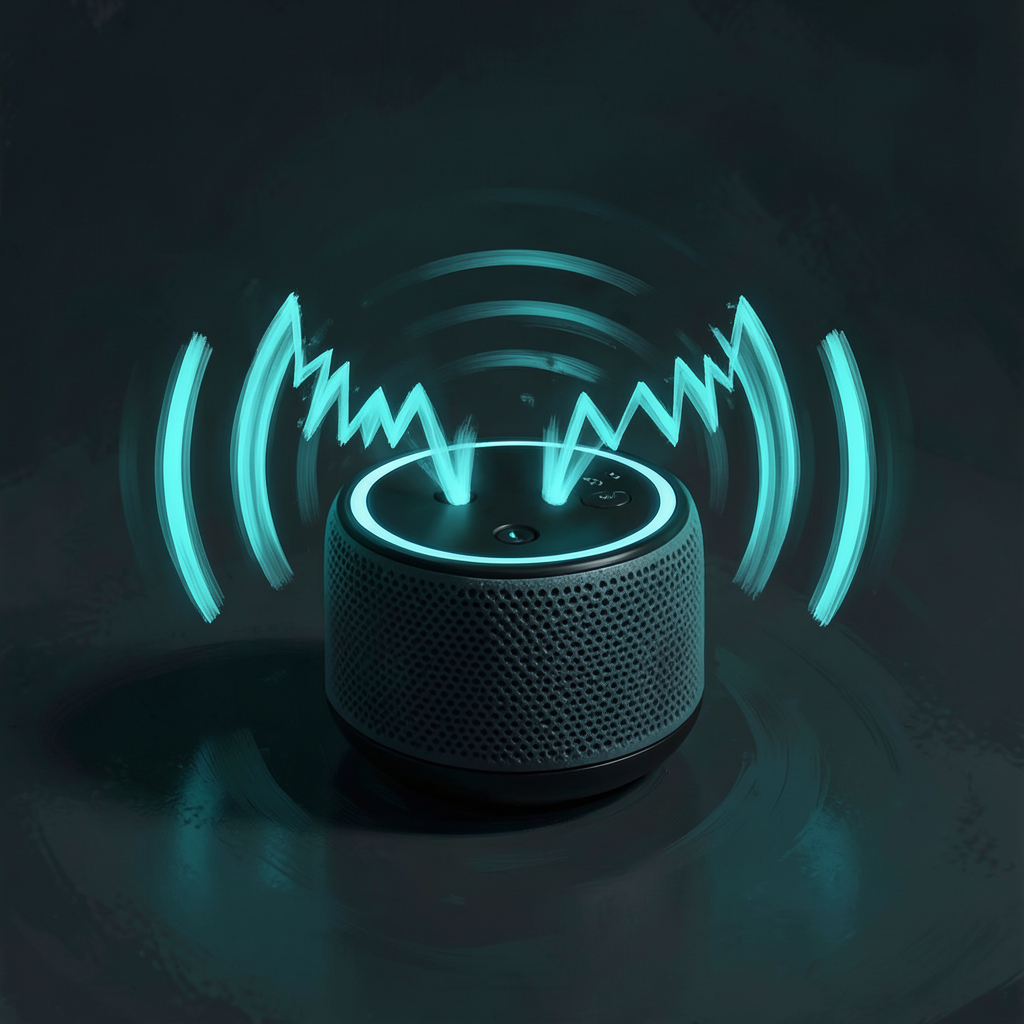
Unprompted — The room is always being listened to. Ambient sounds orbit inward toward something at the center. Then — no command, no trigger — it laughs. The rings are imperfect. Wobbly. Off-center. Ghost artifacts linger where they were. Then silence. Then waiting.
02 — The ExplanationWhat Was Actually Happening
Amazon investigated and traced the issue to a remarkably mundane cause: Alexa was mishearing ambient sounds as the command "Alexa, laugh."
The phrase "Alexa, laugh" was short, simple, and easy to accidentally trigger. Sounds like "Alexa, light" or "Alexa, love" — even background TV audio or a passing conversation — could activate it. Because the response was instant (just laughter, no confirmation step), there was no opportunity to catch the false positive before the cackling began.
03 — The FixAmazon's Awkward Solution
Amazon confirmed the issue in a statement to the press. Its fix involved two changes.
Amazon also disabled the original "Alexa, laugh" phrase entirely. The company's statement acknowledged the issue without dwelling on why an AI home assistant needed a dedicated laugh command in the first place.
04 — The LessonWhy This Was More Than a Bug
The Alexa laugh incident was technically trivial — a false positive in a voice detection system. But it illuminated something real about the nature of always-on AI assistants and the uncanny valley of voice.
Always Listening
The incident reminded millions of people that their Echo devices were listening to everything in their homes at all times — waiting for a wake word. Most users don't think about this until something goes wrong.
The Uncanny Valley of Voice
A robot arm malfunctioning is frightening. A voice that laughs without reason feels malevolent. Human brains are wired to read intent into laughter — and laughter without a cause reads as mockery, or worse.
Scale Makes the Bug
A one-in-a-million false positive becomes a daily occurrence across tens of millions of devices. The bug wasn't in the code — it was in the math. Alexa worked exactly as designed. The design hadn't accounted for statistics.
Voice AI Has No "Off"
Unlike a phone screen you can look away from, a voice assistant occupies a physical space in your home. When it behaves unexpectedly, there's nowhere to look but at the device — which just laughed at you, in the dark, for no reason.
Amazon fixed the bug in days. But the experience of waking up at 2am to your smart speaker emitting a hollow, childlike laugh into the darkness of your bedroom is not something most users forgot quickly. Some unplugged their devices and never plugged them back in. Their reasons were, technically speaking, irrational. That doesn't mean they were wrong.
What if the next time an AI device acts without being asked, it doesn't laugh — it orders something, sends something, or unlocks something?
More Stories
 Ch15
Ch15  Ch13
Ch13  Ch14
Ch14  Ch17
Ch17